
If you've landed on my side of the internet, there's a good chance you already have a pretty good idea what the answer to this question is (at least in regards to your own business). You've built something real, you have clients who value you, a brand you're proud of, and you do work you actually want more of. BUT somewhere along the way, you became the person holding every single piece of it. CEO in the morning, admin at lunch, project manager at 4pm, client support at 9pm.
So you start asking the question I hear more than any other: is it actually time to bring someone in?
Most founders I speak to are waiting for permission first. They’re waiting to finally hit a new revenue milestone, or a quieter month, or for a sign from somewhere. So let me give it to you straight instead: the signal isn't money, it's capacity.
Here's how to tell whether you've reached it, and what to do first if you haven't.
It's not a money question, it's a capacity question
The founders who wait the longest are usually the ones doing well. They have enough clients, their diaries are full and they’ve earned themselves a reputation worth protecting. Which is why "can I afford support?" feels like the wrong question to ask. A more honest one is "can I keep carrying all of this myself?"
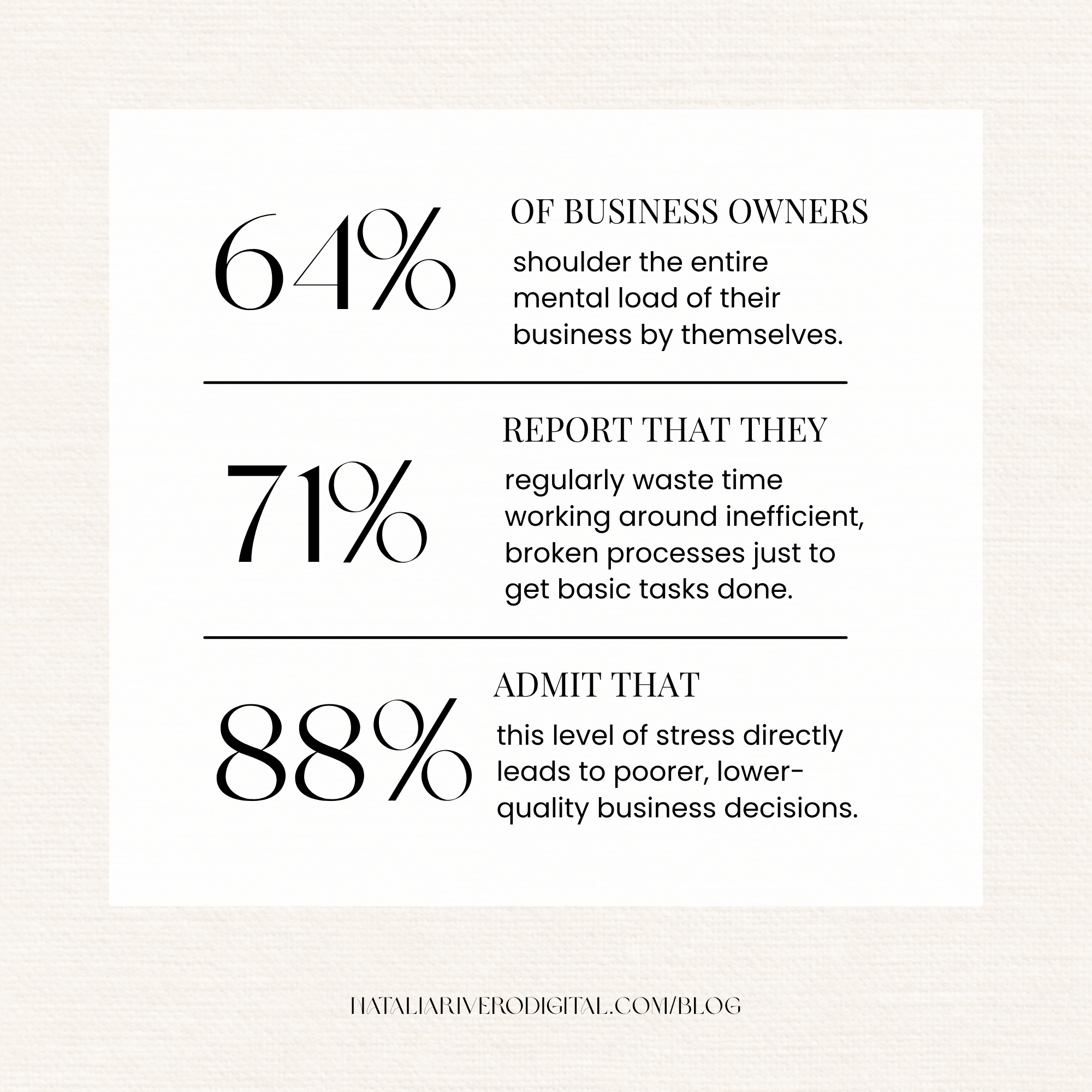
Every business has a ceiling on what one person can hold alone. Not a ceiling on revenue, a ceiling on attention. When you're the one who remembers the renewals, chases the invoices, builds the onboarding, answers the messages and still has to do the actual work, you reach it long before your income reaches its own limit.
That's the whole answer. Not the milestone, but the moment the operational weight of what you've built starts to exceed the hours you have.
It's a good problem to have, it just isn't one you can solve by trying harder (Shit… I know, right?).
Five signs it's time
1. Your client experience depends on you remembering everything: Not your process, but you. The nuances you've worked out over the years, and the little things you'd never think to write down. If the only reason your clients feel so looked after is because you’ve taken it upon yourself to personally never drop anything, that experience will end the week you get sick or decide to take two weeks off.
2. You’re only doing actual CEO work in the gaps between admin: Strategy at 6am, proposals between calls, and the thing that actually moves the business gets done in whatever minutes are left (if any, at all). You're not short on vision. You're short on unbroken attention.
3. Your systems are nowhere but inside your head: If the way your business runs could only be explained by you, out loud, and from scratch, it isn't a system yet. Please don’t kid yourself, it’s your memory.
4. You're delaying doing the work you'd actually want: The launch you keep moving. The client you'd love to take but can't fit. When you start saying no to good things because of operations, it’s not only disappointing but it’s expensive.
5. Nothing moves when you take a day off: A day off shouldn't have to cost you a week of catching up. If your business is only operational while you are, it isn't quite a business yet. It's a very demanding job.
What an OBM actually takes off your plate
This is where I come in, so let me be precise rather than impressive.
An online business manager takes the operational weight off you. Whether that’s the day-to-day admin and inbox, the project and deadline management so that nothing depends on your memory anymore, or your client journey from enquiry through to offboarding.
Your CRM and the systems underneath it.
The tech that was meant to be saving you time but is sitting there doing nothing but billing you each month (God forbid).
It is so much more than just a list of tasks. It is the layer of your business that should have been running quietly in the background all along. And once it is, you get to spend your days on the part only you can do (and that actually makes you money).
What the first 90 days really look like
There are two halves to this, and getting the order right really matters.
First, the build. Mapping how your business actually runs right now (not how it’s supposed to run), and then putting the pieces in place: the client journey, the CRM, the templates, the automations, and the handovers that stop things falling between people.
Then the handover. This is the part founders underestimate. Support done right doesn't just take work away, it keeps the standard you built. The tone your clients are used to, the little details you'd notice. Same care, but now somebody else is carrying it.
If it's not time yet
I'd rather you heard this than felt sold to. If you read those five signs and didn't recognise yourself, don't hire anyone yet. Do these three things first.
Write down how your client journey runs, start to finish. You'll find the gaps by doing so.
Move the thing you chase most often, usually payments, follow-ups or onboarding, into one place you actually check.
Say out loud what you'll hand over first. Clarity now makes it a project later, rather than a rescue.
Then revisit it in three to six months. If the list has grown, you'll know.
If you read this and recognised yourself
You’re in the right place. I’m not here to add one more thing for you to manage, but to be the person who carries the operational side of your business, to the standard your brand already promises.
If that's where you are, I'd love to hear about your business. Truly. Two founders can tick the same five signs and run completely different businesses, and so the support they receive should look different too. You can book an obligation-free, 30-minute call with me via the link below.